From 0 to 40 Booked Calls: A 30-Day Agency Outreach Case Study
We handed one three-person agency a cold-DM outreach engine and tracked every number for 30 days. Here is the full funnel — 12,400 DMs, a 17% reply rate, and the exact sequence that turned strangers into 40 booked calls.

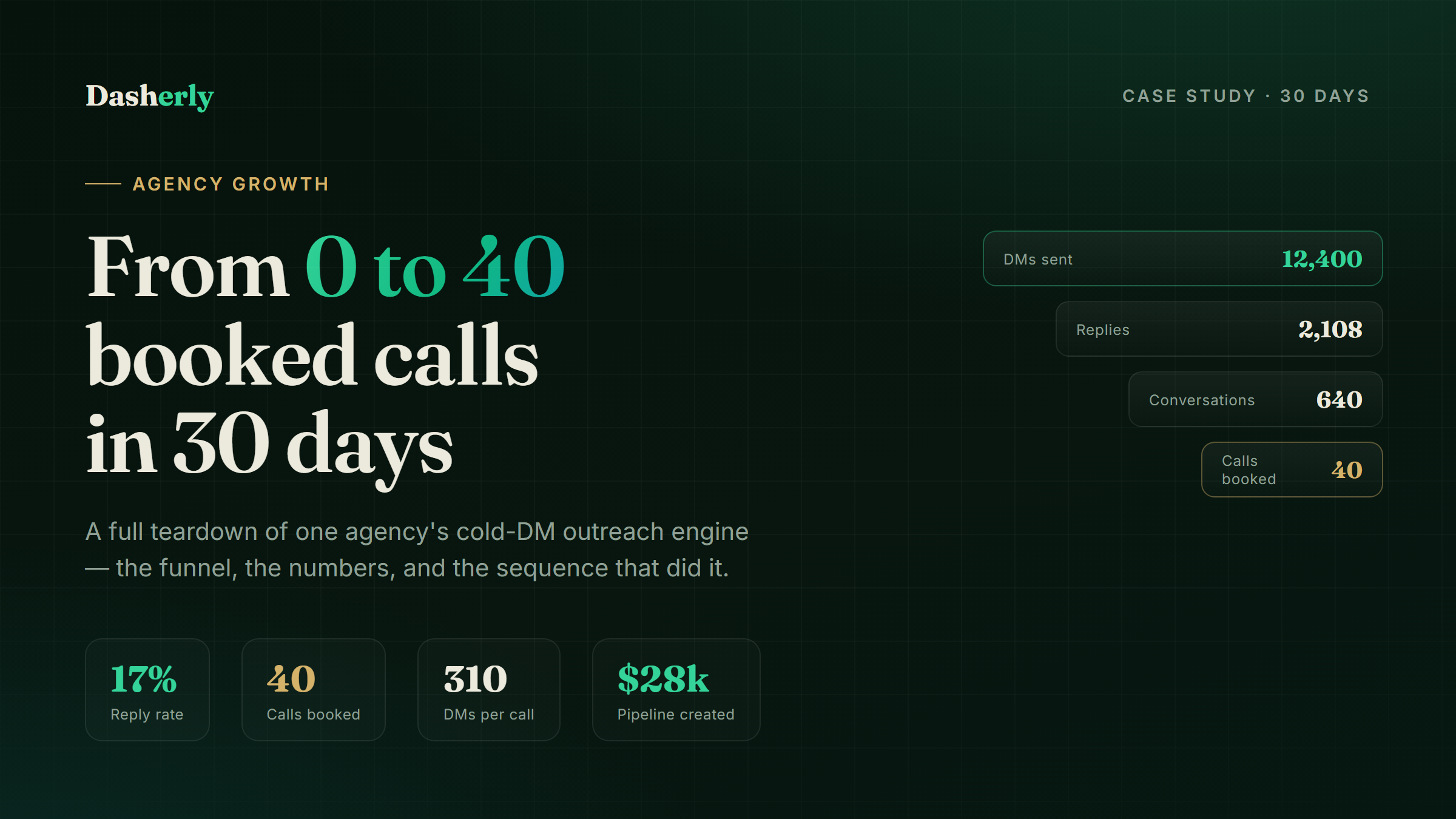
In April, a three-person creative agency came to us with the most common problem in the business: a service people want, and no reliable way to get in front of them. Referrals had dried up. Paid ads burned $40 to book a call that didn't show. So we did the un-sexy thing — we opened DMs and started conversations. Thirty days later, they had 40 booked discovery calls and a pipeline they could actually forecast. Here is exactly how the numbers broke down.
No growth hacks, no follower-buying, no spam. Just a disciplined system: warm the accounts, target the right people, lead every message with something true about them, and let the follow-up do the heavy lifting. Let's pull it apart stage by stage.
Who, what, and the guardrails
The agency sells done-for-you short-form video editing to coaches and course creators — a $2,000–$4,000/month retainer. Their ideal customer is loud on Instagram and X, which made social DMs the obvious channel. The mandate was simple: book qualified calls without getting a single account banned.
- Three Instagram accounts + one X account, each aged and warmed before a single cold DM went out.
- A tight ICP: creators with 5k–80k followers posting consistently but with rough-looking edits.
- A daily cap that started conservative and ramped only as the accounts proved healthy.
- One person spending ~45 minutes a day reviewing replies. Everything else ran on autopilot.
The funnel, stage by stage
Outreach is a funnel, and every funnel leaks. The only job is to widen the top and tighten each drop-off. Here is where 12,400 DMs actually went:
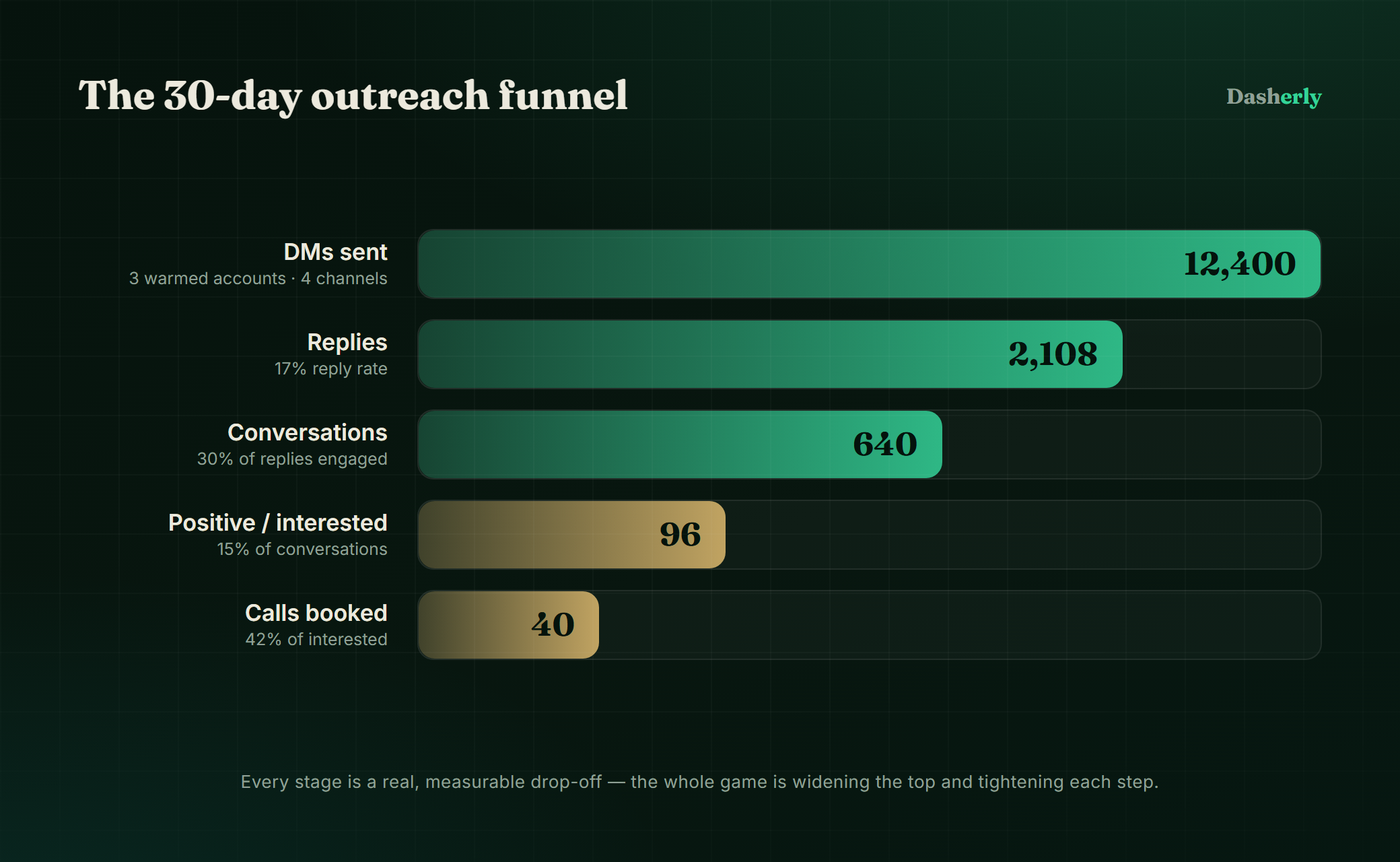
Two numbers matter most here. The 17% reply rate is roughly triple a generic template blast, and it came entirely from a personalized first line. And the 42% of interested prospects who booked tells you the offer and the call-to-action were doing their job. The middle of the funnel — turning replies into real conversations — is where most people quietly lose the game.
The sequence that converted
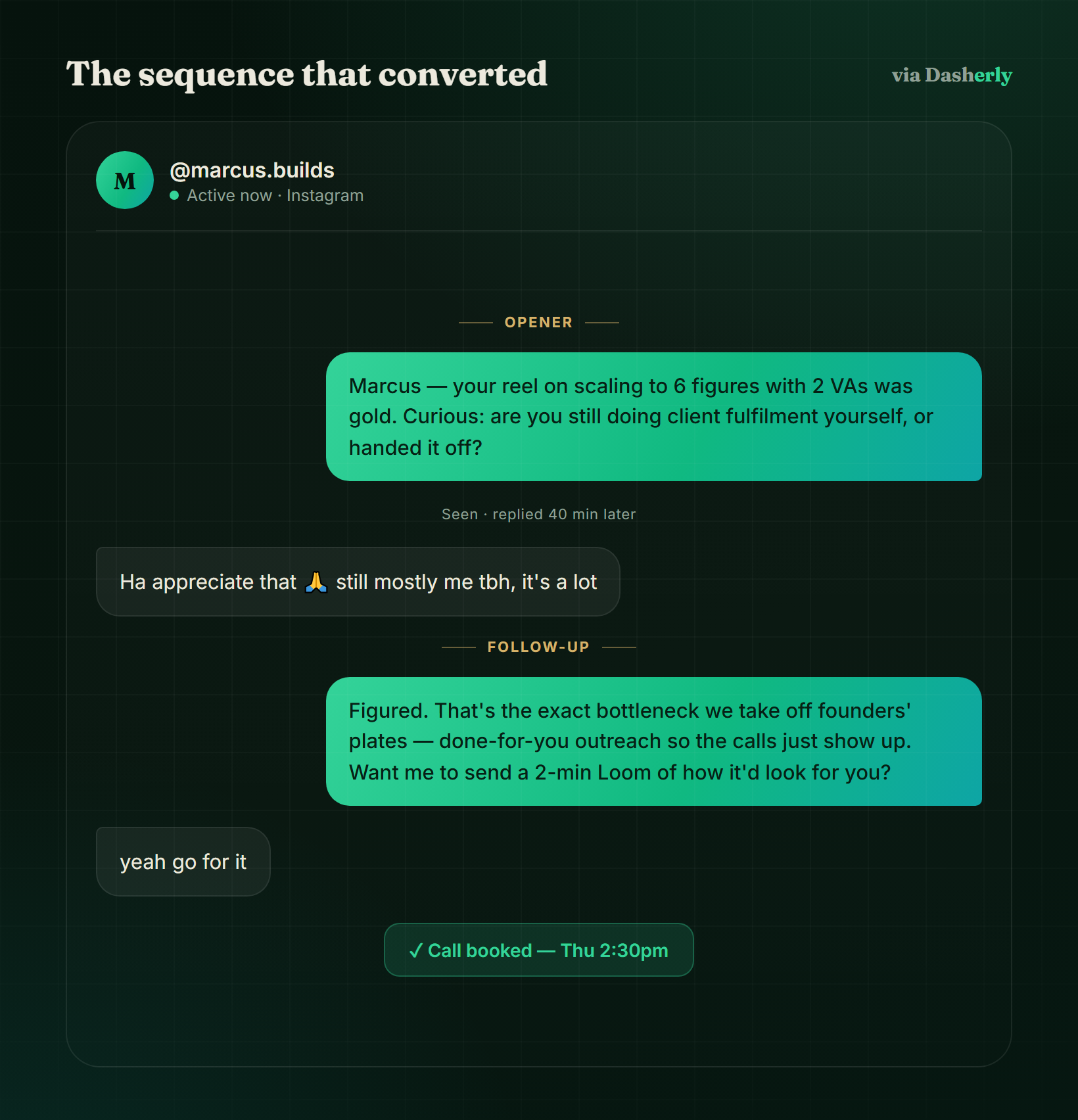
The single biggest lever was the opener. No "Hey, hope you're well!" — every first message referenced something specific the person had actually posted, then asked one genuine question. Here's a real thread (details changed) that ran the exact pattern top to bottom:
-
1
Open with a specific, true observation
Reference their actual content — a reel, a post, a result they shared. This is the line that earns the reply. It cannot be templated without breaking.
-
2
Ask a question that surfaces the pain
One low-friction question that leads toward the problem you solve. "Are you still doing X yourself?" beats "Want to hop on a call?" every time.
-
3
Offer value before you ask for time
A 2-minute Loom, a teardown, a quick idea — something that costs them nothing to say yes to. The call gets booked after the value lands, not before.
Week by week
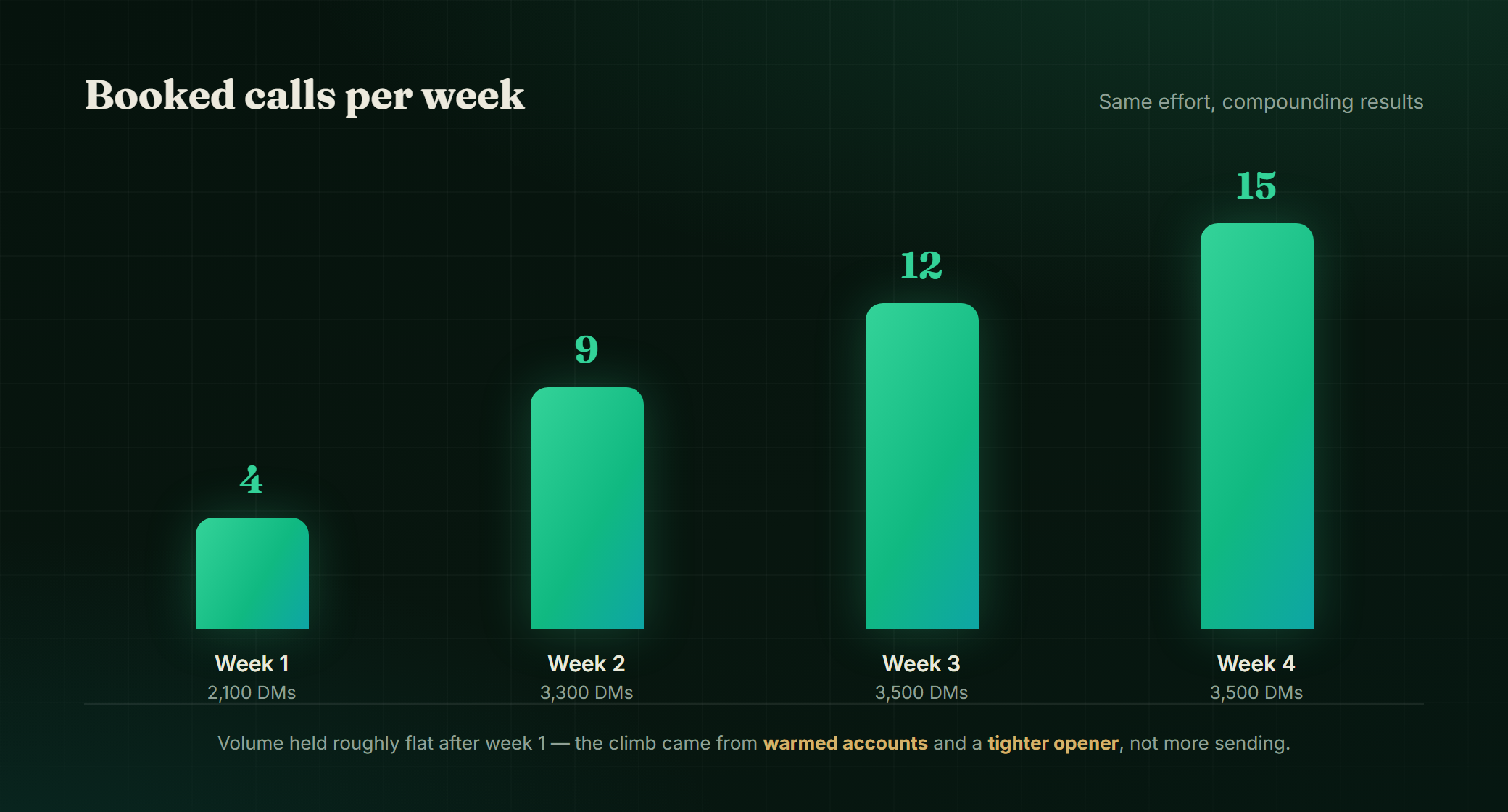
This is the part people miss: results compounded even though sending volume plateaued. Week 1 was slow on purpose — accounts were still ramping and the opener was still being tuned. By week 4, the same effort produced nearly 4x the calls of week 1. The gains came from warmer accounts, a sharper message, and faster reply handling — not from sending more.
We didn't scale volume. We scaled the quality of the first sentence — and the calendar filled itself.
The agency's founder, week 4
Conversations beat campaigns
The reason this outperformed their paid ads isn't mysterious. A DM is a one-to-one conversation in the one place your prospect already checks 40 times a day. An ad interrupts; a good DM continues a thought they were already having.
- Broadcast the same message to everyone
- Pay per impression, hope for a click
- Prospect is a stranger at "hello"
- Success measured in reach
- One relevant message per person
- Cost is time, not ad spend
- Prospect feels seen from message one
- Success measured in booked calls
What a booked call actually cost
Strip out the tooling and the economics are almost embarrassing next to paid acquisition:
| Metric | This campaign | Their paid ads |
|---|---|---|
| Cost per booked call | ~$14 in tooling + time | ~$210 ad spend |
| Show-up rate | 78% | 41% |
| Calls booked / 30 days | 40 | 9 |
| Pipeline created | $28,000 | $6,300 |
Same team, same offer, same 30 days. The channel — and the discipline behind it — was the entire difference.
Dasherly warms your accounts, finds your ideal prospects, and sends personalized DMs across Instagram, X, TikTok & Telegram — so the qualified calls just show up.
What we'd tell you to copy
- Warm your accounts before you send anything cold. This is the whole foundation.
- Spend 80% of your effort on the first sentence. It is the only line that decides whether the rest gets read.
- Track your funnel by stage. Once you know your "DMs per call" number, growth is just a volume dial.
- Follow up with value, not pressure. The call is the reward for a conversation, never the opening ask.
- Keep daily volume boring and sustainable. Compounding beats spikes, and bans end campaigns.
Forty calls in thirty days from a standing start isn't a growth hack — it's what happens when you treat outreach as a series of real conversations and measure every step. The playbook is simple. The discipline is the hard part. That's the part we automate.
Put this into practice on autopilot
Dasherly finds your leads and sends personalized DMs across Instagram, X, TikTok & Telegram — so you book calls while you sleep.
Start free →